
aircraft paper model

Aircraft Paper Model May 2026

Italian Flag bar

Mysterious tales and magic abound in every corner of Italy. In this podcast episode we will talk about these mythical stories originating in various Italian cities.

You’ll hear folktales about the Grand Canal of Venice, the Maddalena Bridge in Lucca, the alleyways of Naples and we will even take you to our capital: Rome, a city hiding many intriguing stories, legends and myths in every corner.

We’re sure that you will find these stories so interesting and that you’ll love this episode!

Download the PDF

Get immediate access to this lesson's accompanying PDF with detailed Summary Notes & practice Exercises with answers! It's free!

No email required

Here are your TRUE/ FALSE Comprehension questions.

You will find the answers to these questions and even more questions in the Bonus PDF.

1. Si narra che a Lucca il Diavolo venne imbrogliato
It is told that the Devil got dupped in Lucca

2. Il corno rosso napoletano non protegge dalle maledizioni
The Neapolitan red horn does not protect you from curses

3. Secondo la leggenda, La Janara è una fata buona
According to legend, the Janara is a good fairy

4. La Bella ‘Mbriana era una bellissima principessa
The Bella ‘Mbriana was a very beautiful princess

5. Si dice che La Bella ‘Mbriana appaia sotto forma di geco
It is said that the The Bella ‘Mbriana appears in the form of a gecko
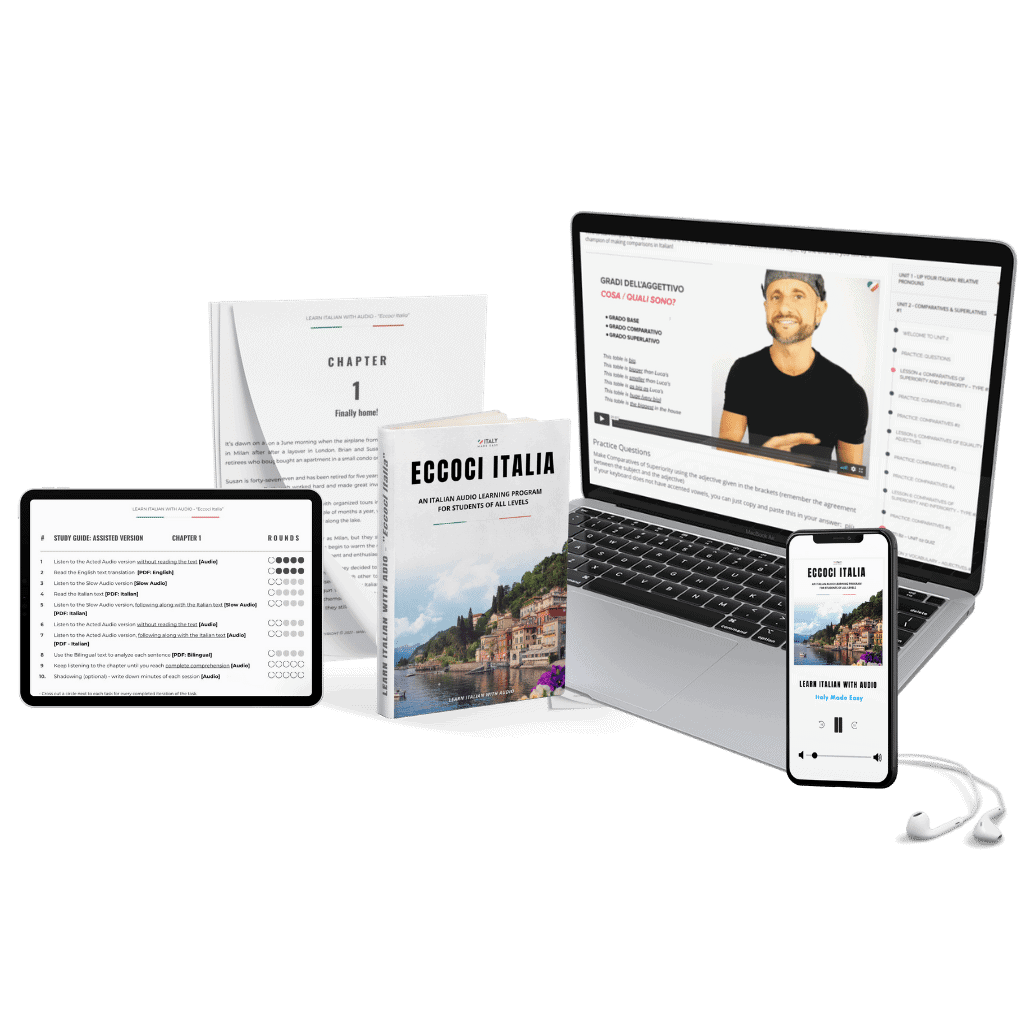
Audiobook for Site 1024px

Understand spoken Italian

You Will Also Enjoy

Aircraft Paper Model May 2026

The magic happens in the development of the model. Designers use 3D software to "unwrap" a digital aircraft into a flat pattern, much like a cartographer flattening a globe into a map. They then add tabs, alignment marks, and breathtakingly realistic textures. A well-made paper 747 doesn’t just look like a plane; it feels like one. You can see the cockpit windows, the panel lines, and even tiny landing gear doors.

For aviation enthusiasts, paper modeling is a form of intimate study. To build a Messerschmitt Bf 109 from paper, you must understand where each panel sits, how the landing gear retracts, and why the canopy shape matters. You don’t just look at the plane; you construct its soul. aircraft paper model

Don’t be fooled by the medium. Master-level paper modeling is a test of patience and dexterity that rivals watchmaking. Builders use dental tools to roll paper into cylindrical engine nacelles. They laminate multiple layers of cardstock to create structural strength. They even "wet fold" thick paper to create compound curves for a jet’s nose cone. The magic happens in the development of the model

Unlike the origami throwing toys of your youth, paper model aircraft (or "card modeling") is a craft of precision. You start with a digital template—often featuring hundreds of parts—that you print, cut, score, fold, and glue. A well-made paper 747 doesn’t just look like

Podcast 49 Cover

Spa and hot springs in Italy

Spa e bagni termali in Italia This podcast is in 100% Italian – spoken at a slower pace, in clear and authentic Italian. It has been designed specifically as a Listening and...

Read this article

The magic happens in the development of the model. Designers use 3D software to "unwrap" a digital aircraft into a flat pattern, much like a cartographer flattening a globe into a map. They then add tabs, alignment marks, and breathtakingly realistic textures. A well-made paper 747 doesn’t just look like a plane; it feels like one. You can see the cockpit windows, the panel lines, and even tiny landing gear doors.

For aviation enthusiasts, paper modeling is a form of intimate study. To build a Messerschmitt Bf 109 from paper, you must understand where each panel sits, how the landing gear retracts, and why the canopy shape matters. You don’t just look at the plane; you construct its soul.

Don’t be fooled by the medium. Master-level paper modeling is a test of patience and dexterity that rivals watchmaking. Builders use dental tools to roll paper into cylindrical engine nacelles. They laminate multiple layers of cardstock to create structural strength. They even "wet fold" thick paper to create compound curves for a jet’s nose cone.

Unlike the origami throwing toys of your youth, paper model aircraft (or "card modeling") is a craft of precision. You start with a digital template—often featuring hundreds of parts—that you print, cut, score, fold, and glue.