Fanuc B-65322 Manual -

Google Maps Scraper lets you extract data from Google Maps and export to CSV/JSON/EXCEL file, includes reviews, images, phone number, email address and social media profiles.

Get started - it's free

  Add to Chrome   Add to Edge

4.98 / 5 stars (from 12,500+ customers)

Fanuc B-65322 Manual -

Have you found a magic parameter in the B-65322 that changed your machining life? Share your experience in the comments below—just remember to include your control model (e.g., 31i-B5)!

| Parameter | Function | The "Too High" vs "Too Low" Symptom | | :--- | :--- | :--- | | | Enables High Precision Contour Control | Off: Rough arcs. On: Potential buffer overflow on slow processors. | | PRM 1769 | Corner Deceleration Tolerance | High: Sharp corners get rounded. Low: Machine slams to a stop at every intersection. | | PRM 1783 | Allowable speed difference for smooth interpolation | This is the "anti-fishtail" parameter. Set too aggressive, and the machine ignores small details. | | PRM 3410 | Jerk control limit | Controls physical vibration. Lower value = smoother surface, slower cycle. |

Today, we are taking a deep, technical dive into one of the most influential, yet often overlooked, FANUC documentation sets: (officially titled High Speed & High Accuracy & Nano Processing Maintenance Manual ). fanuc b-65322 manual

I once spent three days chasing a "chatter" mark on a P20 mold base. We changed tools, holders, and speeds. The solution was in B-65322. Parameter PRM 1783 was set to 100 (too restrictive). Changing it to 300 allowed the control to smooth the transition without stopping. The manual’s flowchart on page 243 saved the job. 4. Common Misconceptions (Debunked by the Manual) Let’s clear up three myths that the B-65322 explicitly corrects.

In the world of CNC machining, precision is a currency, and speed is its volatile counterpart. Balancing the two is the eternal challenge for any programmer or shop floor manager. When you’re running a FANUC-controlled machine—be it a machining center, lathe, or profiler—the key to unlocking this balance rarely lies in G-codes alone. It lives in the parameters. Have you found a magic parameter in the

FANUC documentation is proprietary and constantly revised. Always refer to your specific hardware version (Series 30i/31i/32i-B, -B2, or -A) before changing parameters. This post is for educational analysis of the manual’s structure and intent. 1. The Holy Grail of Surface Finish: What is the B-65322? Most CNC programmers are familiar with the standard operator manuals (B-63534, B-64335). Those tell you how to write a macro or set a work offset. The B-65322 series, however, is the “Black Ops” manual. It is FANUC’s official guide to the AI Contour Control (AICC) and High-Speed Machining (HSM) algorithms.

Most machine tool builders ship their machines with "safe" parameters. They prioritize avoiding crashes over achieving speed. To get the performance you paid for, you have to go into the maintenance manual and unlock it. On: Potential buffer overflow on slow processors

"G05.1 Q1 and G05.1 Q2 are interchangeable." Reality: The manual shows that Q1 (AICC I) uses a fixed look-ahead buffer. Q2 (AICC II) uses a dynamic buffer and is required for Nano processing. Using Q1 on a finishing path causes "block delay" marks.
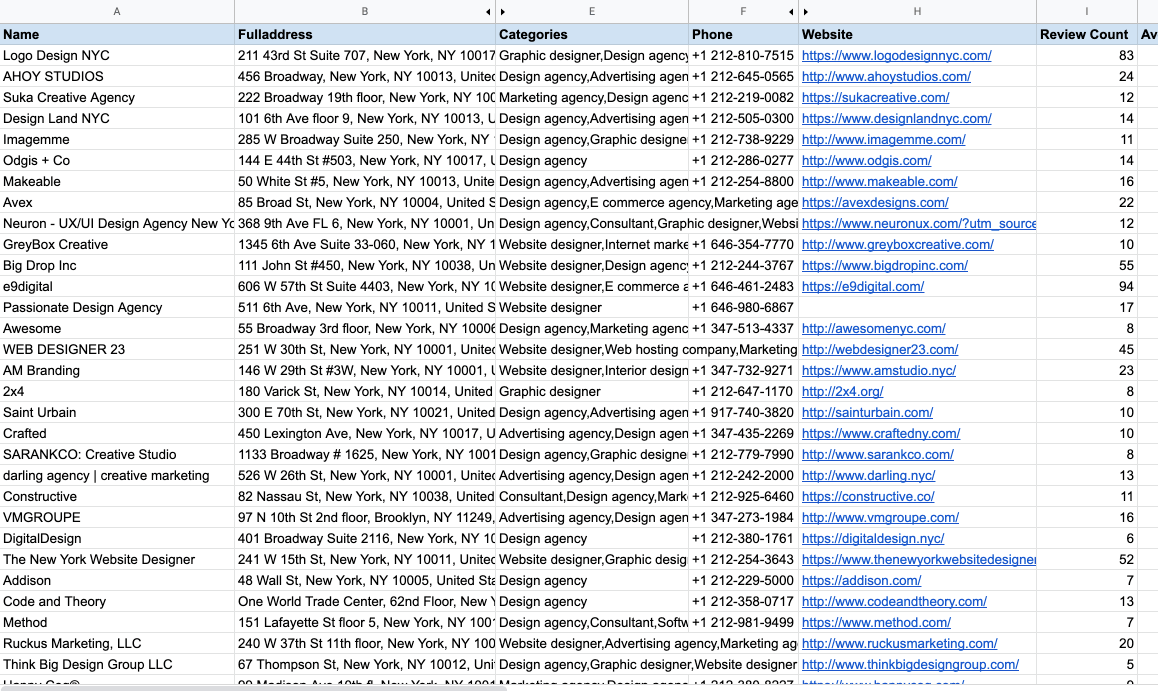
G Maps Extractor extracts business leads and export data to excel file.

This Google Maps Scraper will enabled you to extract data from Google Maps.

Google Maps Scraper - Excel file
Google Maps Scraper - Chrome Extension

Download the demo data of 'design agency near New york, NY' 

Have you found a magic parameter in the B-65322 that changed your machining life? Share your experience in the comments below—just remember to include your control model (e.g., 31i-B5)!

| Parameter | Function | The "Too High" vs "Too Low" Symptom | | :--- | :--- | :--- | | | Enables High Precision Contour Control | Off: Rough arcs. On: Potential buffer overflow on slow processors. | | PRM 1769 | Corner Deceleration Tolerance | High: Sharp corners get rounded. Low: Machine slams to a stop at every intersection. | | PRM 1783 | Allowable speed difference for smooth interpolation | This is the "anti-fishtail" parameter. Set too aggressive, and the machine ignores small details. | | PRM 3410 | Jerk control limit | Controls physical vibration. Lower value = smoother surface, slower cycle. |

Today, we are taking a deep, technical dive into one of the most influential, yet often overlooked, FANUC documentation sets: (officially titled High Speed & High Accuracy & Nano Processing Maintenance Manual ).

I once spent three days chasing a "chatter" mark on a P20 mold base. We changed tools, holders, and speeds. The solution was in B-65322. Parameter PRM 1783 was set to 100 (too restrictive). Changing it to 300 allowed the control to smooth the transition without stopping. The manual’s flowchart on page 243 saved the job. 4. Common Misconceptions (Debunked by the Manual) Let’s clear up three myths that the B-65322 explicitly corrects.

In the world of CNC machining, precision is a currency, and speed is its volatile counterpart. Balancing the two is the eternal challenge for any programmer or shop floor manager. When you’re running a FANUC-controlled machine—be it a machining center, lathe, or profiler—the key to unlocking this balance rarely lies in G-codes alone. It lives in the parameters.

FANUC documentation is proprietary and constantly revised. Always refer to your specific hardware version (Series 30i/31i/32i-B, -B2, or -A) before changing parameters. This post is for educational analysis of the manual’s structure and intent. 1. The Holy Grail of Surface Finish: What is the B-65322? Most CNC programmers are familiar with the standard operator manuals (B-63534, B-64335). Those tell you how to write a macro or set a work offset. The B-65322 series, however, is the “Black Ops” manual. It is FANUC’s official guide to the AI Contour Control (AICC) and High-Speed Machining (HSM) algorithms.

Most machine tool builders ship their machines with "safe" parameters. They prioritize avoiding crashes over achieving speed. To get the performance you paid for, you have to go into the maintenance manual and unlock it.

"G05.1 Q1 and G05.1 Q2 are interchangeable." Reality: The manual shows that Q1 (AICC I) uses a fixed look-ahead buffer. Q2 (AICC II) uses a dynamic buffer and is required for Nano processing. Using Q1 on a finishing path causes "block delay" marks.

See what our customers say

Trusted by thousands happy customers worldwide.

Its good working and best Google Maps Scraper for India Google Map market, thanks boss.   John Harper
Great tool! Worked exactly as described. Save me hours and hours of time ! Thanks to the developer for providing it!   Mike Bradley
Great scraping tool that making my job much easier than others. It saves my time and cost. Awesome customer services. Support team helped me with few critical issues. Thank you!   Jeremy Hood
This is a Google Maps Scraper that works very well for scraping Google Maps, I use it every day it's part of the essential toolkit of b2b cold emails.   Vla Derach
I had the same luck. I spent days doing that, and then I came across this amazing scraper, simple, no disk space equired and easy to use. simply amazing, and the customer support is beyond expectations.   Kevin Joseph
The Google Maps Scraper is great! I could extract many business leads for the niche I want to serve.   Nourédine R

FAQs

What is the difference between a Free account and a Paid account?
  • Free account can only export up to 10 leads base on a keyword search results.
  • Paid account can export all leads base on a keyword search results.
  • See and compare all features
I just want to use G Maps Extractor once to export data. Is it possible?

Yes. You're free to take a subscription just for one month and cancel it when your work is done.

Can I cancel my subscription whenever I want?

Yes, you can change or cancel your plan at any time. Once you have canceled, you'll still have access to your premium plan until the end of your subscription cycle.