Enhanced/Dual Powered
Willem EPROM Programmer
User Guide
Main Board / Cables
Main Board PCB3.5
Main Board PCB4E

Main Board PCB5.0

Main Board PCB5.5C

|
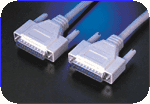
Parallel Data Cable (Printer extension cable, with male-female 25 pin connector, and pin to pin through) |
A-A type USB cable(for power) |
|
|
|
Optional Items:
|
ATMEL 89 Adapter |
ATMEL PLCC 44 Adapter |
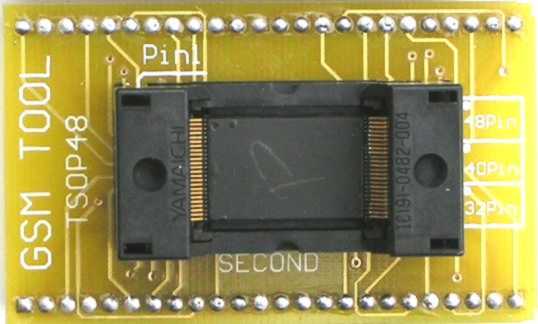
TSOP 48 Adapter |
|
|
|
|
|
FWH/HUB PLCC32Adapter |
PLCC32 Adapter |
SOIC Adapter(Simplified) |
|
On-Board |
On-Board |
|
|
AC or DC Power Adapter (9V or 12V, 200mA) |
SOIC Adapter(Professional) |
|
|
|
|
|
Before you turn a single bolt on an F8-powered 626, MX-6, or Bongo van, invest the time to locate a genuine PDF. Save it to your phone, tablet, and a cloud backup. Your engine – and your sanity – will thank you when the job goes smoothly, and the engine fires up with quiet, smooth reliability for another 100,000 miles. If you cannot locate a free PDF, consider purchasing a used original manual from a Mazda collector. For a one-time rebuild, the cost is trivial compared to a blown head gasket from incorrect torque.
Introduction: The Overlooked Workhorse The Mazda F8 engine is a often-overlooked yet highly durable powerplant from Mazda’s legendary F-family of inline-four engines. Produced throughout the late 1980s and 1990s, the 1.8-liter (actually 1789 cc) F8 served as the smaller-displacement sibling to the famous 2.0-liter FE and 2.2-liter F2 engines. While it lacks the performance pedigree of the turbocharged F2T, the F8 is renowned for its reliability, fuel efficiency, and smooth power delivery in economy-focused sedans, hatchbacks, and vans. Mazda F8 Engine Service Manual Pdf
Hardware Installation & Configuration
|
Installation Steps
(Note: the LPT port of PC MUST set to ECP or ECP+EPP during BIOS setup. To enter the BIOS setting mode, you need press "Del" key or "F1" key during the computer selftest, which is the moment of computer just power up.)
Software Version To Use | |||
| |||
|
| |||
|
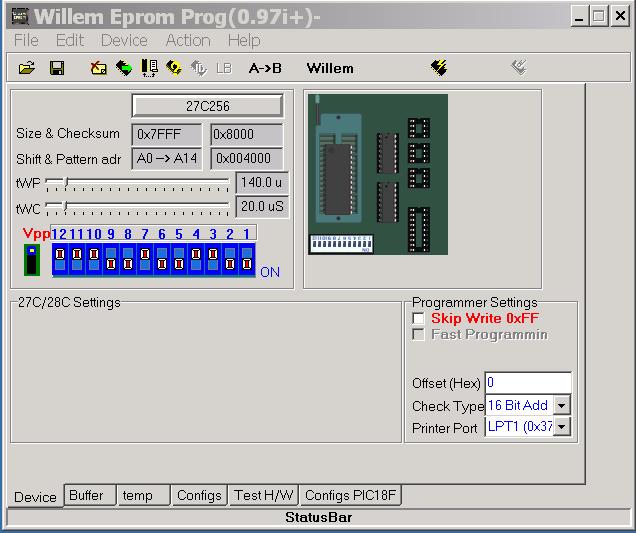
The software interface:
| |||
|
| |||
|
Hardware
Check
| |||
|
PCB3.5/PCB4E
PCB5.0
PCB5.5C
Note: the Vcc setting jumper only has effect when you are using AC adaptor as power source. For the USB power only 5V Vcc is available. For the PCB5.5C, set DIP steps: 1. press DIP Set button twice to check current DIP bit position. Then set it again for ON or OFF. 2. press DIP Bit shift button to shift the DIP bit position to where need to set. And then press DIP Set button twice to check current DIP bit position. Then set it again for ON or OFF. 3. Repeat those steps till all DIP bit ae set same as software indicated. For PCB5.5C voltage and Special chip selection: 1. Put back the safety jumper. 2. Press the voltage button and hold for 1 second, the voltage LED should move to next. Repeat till desired voltage LED light up. 3. Press the chip selection button and hold for 1 second, the chip LED should move to next. Repeat till desired LED light up. 4. Remove the safety jumper to lock the selected voltage and chip selection
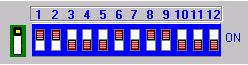
DIP Switch (PCB3.5, PCB5.0)
When programming one chip, follow the program prompt to set DIP switch .
|
Before you turn a single bolt on an F8-powered 626, MX-6, or Bongo van, invest the time to locate a genuine PDF. Save it to your phone, tablet, and a cloud backup. Your engine – and your sanity – will thank you when the job goes smoothly, and the engine fires up with quiet, smooth reliability for another 100,000 miles. If you cannot locate a free PDF, consider purchasing a used original manual from a Mazda collector. For a one-time rebuild, the cost is trivial compared to a blown head gasket from incorrect torque.
Introduction: The Overlooked Workhorse The Mazda F8 engine is a often-overlooked yet highly durable powerplant from Mazda’s legendary F-family of inline-four engines. Produced throughout the late 1980s and 1990s, the 1.8-liter (actually 1789 cc) F8 served as the smaller-displacement sibling to the famous 2.0-liter FE and 2.2-liter F2 engines. While it lacks the performance pedigree of the turbocharged F2T, the F8 is renowned for its reliability, fuel efficiency, and smooth power delivery in economy-focused sedans, hatchbacks, and vans.