Anker Soundcore Flare 2 Review: An Impressive Portable Speaker
With warm sound, good volume, competitive pricing, and useful extras, Anker’s Soundcore Flare 2 is an impressive midrange portable speaker.

The greatest hits album does not merely reflect popularity; it actively constructs legacy. For millions of listeners, the hits album is the only version of an artist they know. A teenager in 1976 who bought Frampton Comes Alive! (a live album that functioned as a greatest hits) experienced Peter Frampton not as a studio artist but as a greatest-hits phenomenon. The omissions are as important as the inclusions. When an artist’s deep cuts or experimental tracks are left off, the public’s perception narrows.
The Greatest Hits: Cultural Memory, Commercial Engineering, and the Evolution of the Compilation Album
This album’s success reveals the core truth of the greatest hits genre: . The consumer does not want a journey or a concept. They want “Take It Easy,” “Witchy Woman,” and “Desperado” in sequence, no skipping required.
Thus, the greatest hits album occupies a dual role: for rock-oriented album artists, it is a simplification; for pop and singles artists, it is the definitive statement.
The greatest hits album is far more than a cynical cash grab. It is a cultural technology for managing musical memory. It decides what endures, what is forgotten, and how an artist is discussed at dinner parties, weddings, and funerals. From Johnny Mathis to the Spotify playlist, the desire to assemble the “best of” reflects a fundamental human impulse: to summarize, to canonize, and to share the songs that made us feel something.
In the lexicon of popular music, few phrases carry as much weight, familiarity, or commercial power as “The Greatest Hits.” What began as a post-hoc marketing strategy for record labels in the 1960s has evolved into a defining cultural artifact—a curated snapshot of an artist’s commercial peak, a time capsule of a specific era, and often the only album a casual listener will ever own. This paper argues that the “Greatest Hits” compilation is not merely a repackaging of old songs; it is a complex mechanism that shapes musical legacies, influences public memory, and reflects the shifting economics of the music industry. By examining its historical origins, commercial strategies, and cultural impact, we can understand how the greatest hits album became both a beloved consumer product and a contested symbol of artistic authenticity.
However, this view is elitist. For much of pop music history—Motown, reggae, hip-hop, and dance music—the single was the primary unit of creation. are not distortions but accurate representations of a singles-driven factory system. For artists like The Supremes or The Temptations , the greatest hits album is the authentic document; the studio albums were often filler around the singles.

Founder and editor of Too Many Adapters, Dave managed computer networks and tech support teams for 15 years before the desire to travel took over. In 2011 he sold whatever wouldn’t fit into a backpack and moved to Thailand to start life as a digital nomad. He’s been running this site alongside a small team of fellow experts ever since.
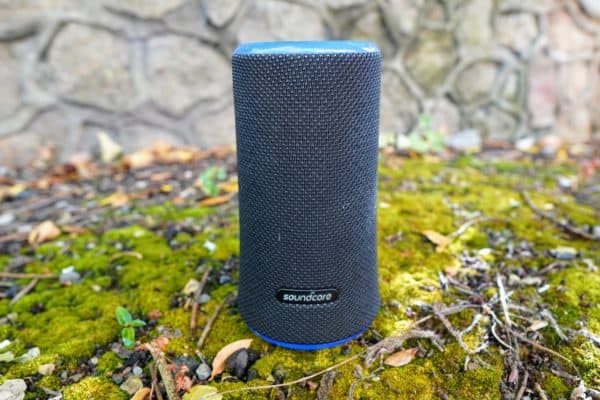
With warm sound, good volume, competitive pricing, and useful extras, Anker’s Soundcore Flare 2 is an impressive midrange portable speaker.

What you need to know about buying a SIM card in Italy.

Whether you’re taking up running for the first time or training for a marathon, these are the best apps to do it with.

Looking to stay connected in Brunei? Here’s everything you need to know about buying a local SIM card in the sultanate.
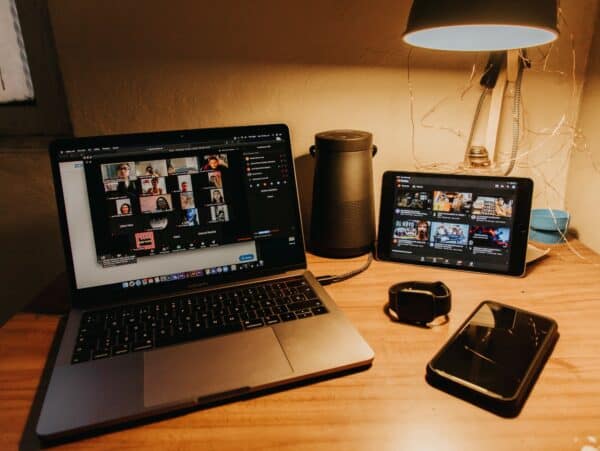
How to setup a local media server and watch your favorite shows in your RV (or anywhere else)
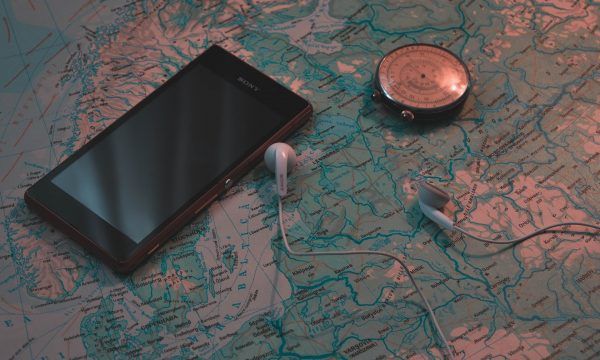
14 super-useful Google Maps tricks and secrets for travelers.
Note that comments are manually approved, so there will be a delay before they appear on the site. Please keep them polite.
My longtime favourite is Solomon’s Boneyard (see also: Solomon’s Keep!). I’ll have to check out Eternium because it might be similar — you pick a wizard that controls a specific element (magic balls, lightning, fire, ice) and see how long you can last a graveyard shift. I guess it’s kind of a rogue-lite where you earn upgrades within each game but also persistent upgrades, like magic rings and additional unlockable characters (steam, storm, fireballs, balls of lightning, balls of ice, firestorm… awesome combos of the original elements.)
I also used to enjoy Tilt to Live, which I think is offline too.
Donut county is a fun little puzzle game, and Lux Touch is mobile risk that’s played quickly.
Fun
Thank you great list. My job entails hours a day in an area with no internet and with very little to do. Lol hours of bordom, minutes of stress seconds of shear terror !
Some of these are going to be life savers!
I hope these help get you through! 😁
I’ve put hours upon hours into Fallout Shelter. You build a Fallout Shelter and add rooms to it Electric, Water, Food, and if you add a man and woman to a room they will have a baby. The baby will grow up and you can add them to an area to help with the shelter. Outsiders come and attack if you take them out sometimes you can loot the body to get new weapons. There’s a lot more to it but thats kind of sums it up. Thank you for the list I’m down loading some now!
Oh man, I spent so much time on Fallout Shelter a few years ago! Very fun game — thanks for the reminder!